




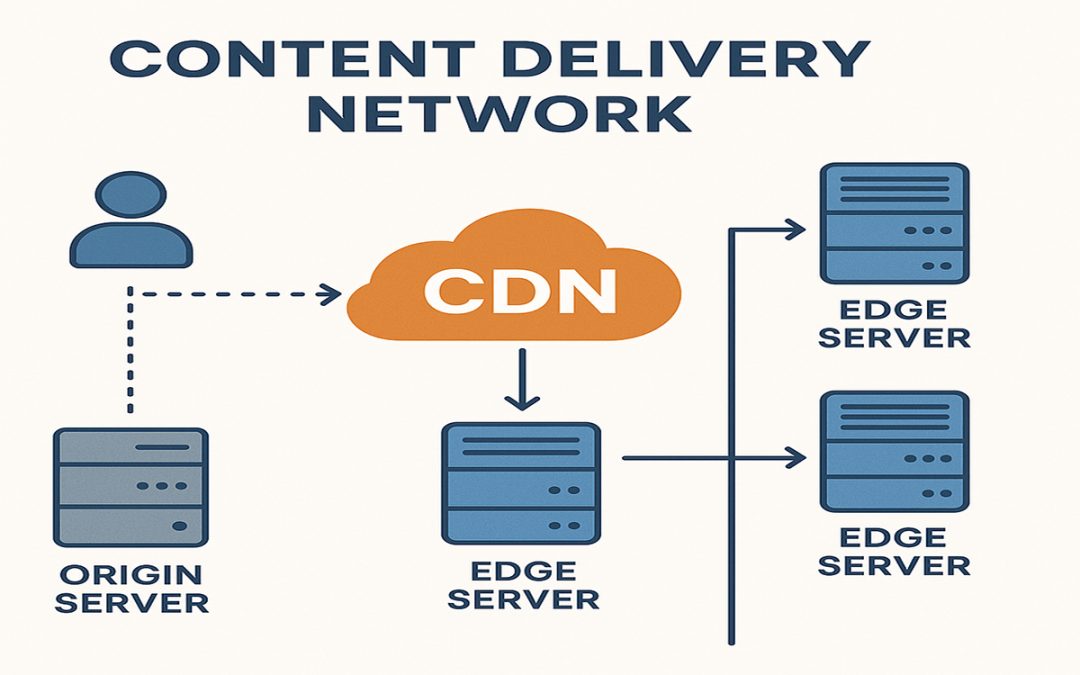
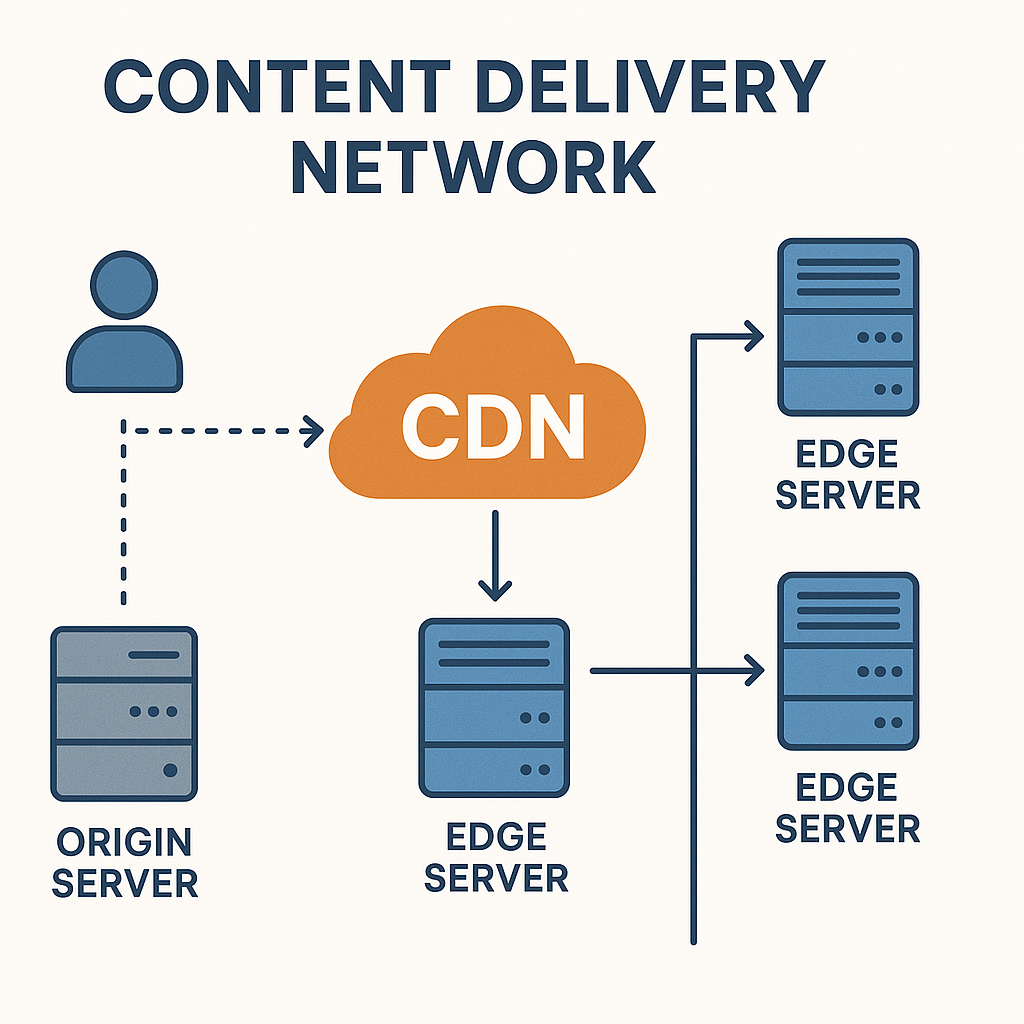
Understanding Content Delivery Networks: A Content Delivery Network (CDN) is a system of distributed servers strategically located around the globe to deliver web content—like images, videos, stylesheets, JavaScript files, and even entire webpages—more efficiently to users based on their geographic location.
Key Concepts of a CDN:
1. Geographic Distribution
-
Instead of relying on a single origin server, CDNs have multiple edge servers located in various regions.
-
When a user requests content, it’s served from the nearest edge server, reducing latency and load time.
2. Caching
-
CDNs store cached copies of static (and sometimes dynamic) content from the origin server.
-
This reduces the number of requests to the original server, improving speed and reducing bandwidth usage.
3. Load Balancing
Traffic is intelligently routed to avoid overloading any one server, improving reliability and performance.
4. Security
-
CDNs often include DDoS protection, SSL/TLS encryption, and Web Application Firewall (WAF) capabilities.
-
They act as a buffer between the user and the origin server.
5. Content Optimization
CDNs can compress files, convert images to more efficient formats, and use modern protocols like HTTP/2 or QUIC for faster delivery.
Benefits of Using a CDN:
-
Faster load times for users globally.
-
Reduced server load on the origin server.
-
Improved scalability, especially during traffic spikes.
-
Enhanced security against common web threats.
-
Better user experience, leading to higher engagement and SEO benefits.
Common CDN Providers:
-
Cloudflare
-
Akamai
-
Amazon CloudFront
-
Google Cloud CDN
-
Fastly
Recent Posts
- Common Hosting Issues and How to Solve Them
- 15 Git command line tips every developer should know
- A Comprehensive Migration Guide for Upgrading Django Versions
- Implementing Internationalization and Localization in Django
- Upgrading Django Versions: A Comprehensive Migration Guide
- Optimizing Django Application Performance: Profiling and Tweaking
- Building a Chat Application Django
- User Authentication and Authorization in Django
- Building RESTful APIs with Django Rest Framework
- Django Views and Templates: Rendering Dynamic Web Pages
- Understanding Django Models: Building the Data Structure
- Creating a CRUD Application with Django
- Django Fundamentals: Setting Up Your First Project
- Migrating from Older Versions of Laravel: Best Practices and Considerations
Now, If you want then buy a good, reliable, secure web hosting service from here: click here
In Conclusion, If you enjoyed reading this article and have more questions please reach out to our support team via live chat or email and we would be glad to help you. In Other Words, we provide server hosting for all types of need and we can even get your server up and running with the service of your choice.